
A disc problem and a vertebral slip can produce similar leg pain, but they are different structural findings and do not always need the same operation. By the end, you will know which symptoms call for assessment beyond routine disc care, which scans reveal instability, and how to question a recommendation for decompression or fusion.
Key takeaways
- Compare MRI with standing and flexion-extension X-rays.
- Treat the nerve compression and vertebral instability as separate problems.
- Ask what happens if decompression removes stabilising bone.
- Get the surgical goal, alternatives and recovery limits in writing.
Is the pain coming from a herniated disc, a vertebral slip, or both?
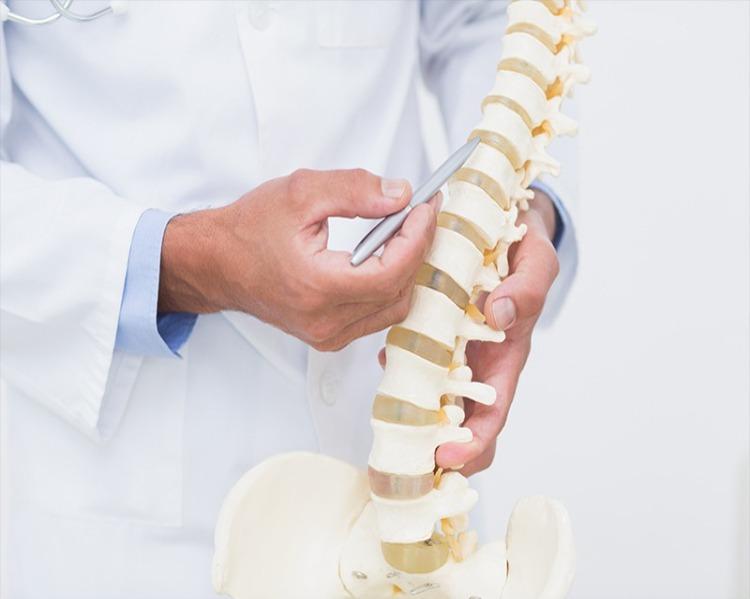
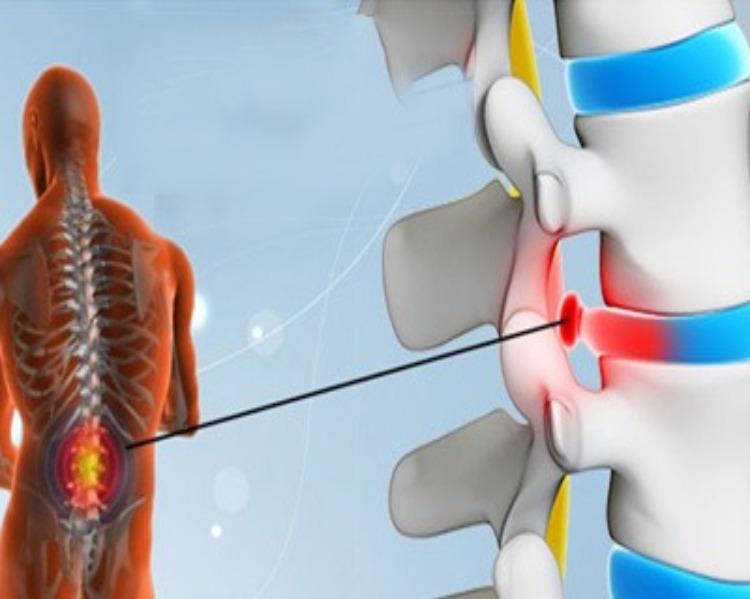
A herniated disc is displaced disc material that can press on a nerve. Spondylolisthesis means one vertebra has moved forward relative to the vertebra below it. Both can occur together: a slipped vertebra can narrow the nerve passage, while disc degeneration or a pars interarticularis defect can contribute to instability.
Removing a disc fragment does not correct the vertebral slip.
| Finding | What it points to | Typical symptom pattern |
|---|---|---|
| Herniated disc | Nerve compression by disc material | Sciatica, numbness, or weakness along one leg |
| Spondylolisthesis | Vertebral translation or instability | Mechanical low-back pain, worse with standing or spinal extension |
| Both conditions | Disc compression plus altered spinal alignment | Recurrent sciatica with back pain, walking limitation, or symptoms after discectomy |
Arrange assessment by a spondylolisthesis surgeon for slip disc treatment if you have:
- Pain aggravated by standing or extending your spine
- Persistent mechanical low-back pain or tight hamstrings
- Recurrent sciatica, leg numbness, or leg weakness
- A shorter walking distance because symptoms worsen
- A known pars interarticularis defect
- Symptoms returning after discectomy
Do not wait for a routine appointment if you develop new urinary retention or incontinence, loss of bowel control, numbness around the genitals or anus, rapidly worsening leg weakness, or severe pain after trauma. These symptoms require urgent medical evaluation.
Which tests show whether the vertebra is slipping or moving under load?
Clinicians confirm a vertebral slip by combining examination with weight-bearing and movement X-rays, not by accepting an MRI report alone. The neurological examination records pain distribution, leg strength, sensation, reflexes, walking capacity, and functional limitation.
A standing lateral lumbar X-ray shows alignment while your spine bears weight; flexion-extension X-rays show whether the vertebra moves abnormally between bending forward and backward.
| Test | What it shows | Why it matters |
|---|---|---|
| Standing lateral lumbar X-ray | Forward translation under load | A supine scan can hide a weight-bearing slip |
| Flexion-extension X-rays | Change in alignment during movement | Helps identify dynamic instability |
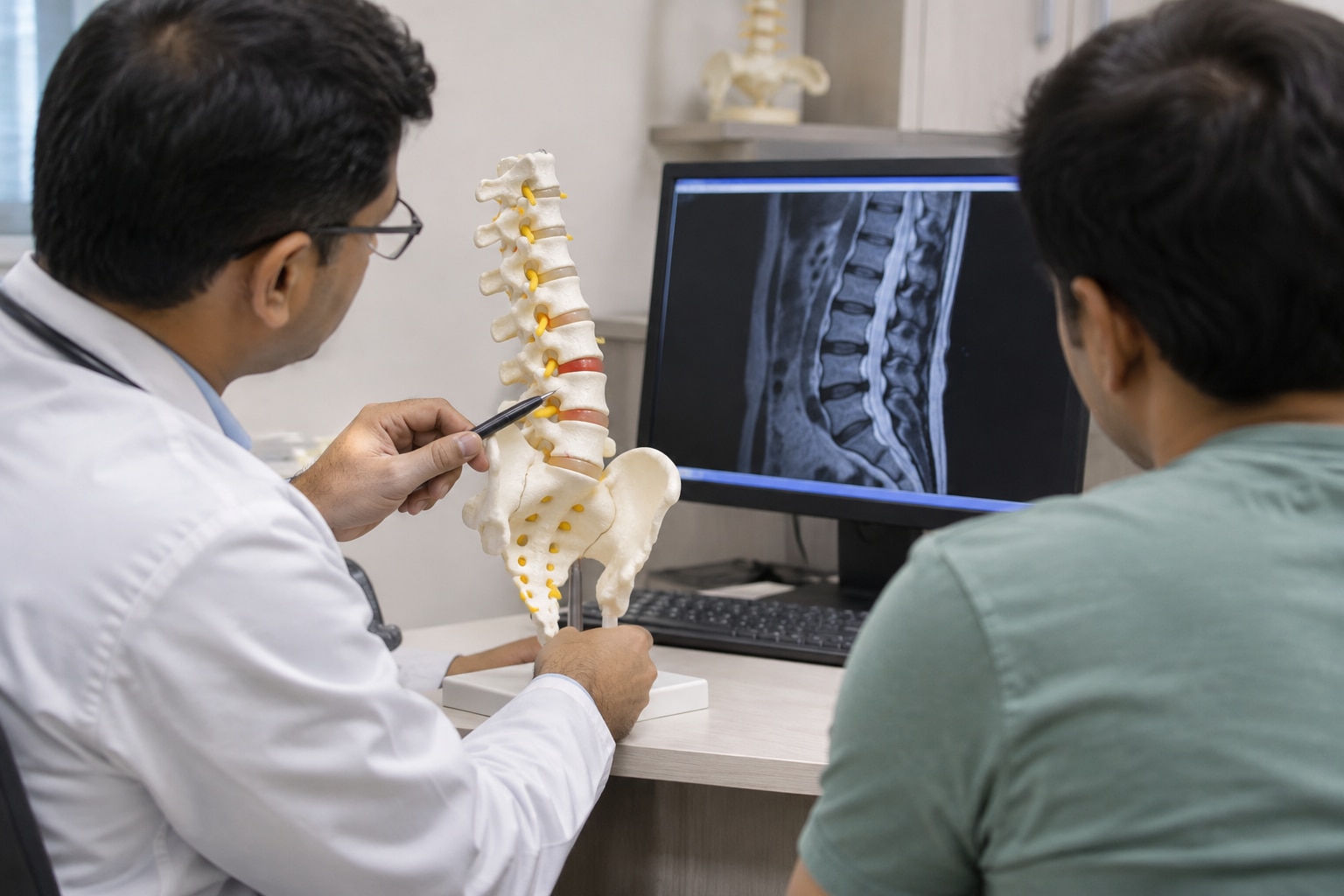
| MRI | Compressed nerve, disc herniation, or spinal stenosis | Matches anatomy to leg pain, weakness, and reflex changes |
| CT | Pars interarticularis defect and other bone detail | Clarifies anatomy when X-rays or MRI are insufficient |
MRI remains important when sciatica, weakness, or stenosis is present, but a scan finding without matching symptoms is not a diagnosis for surgery. A slip that appears during standing may look smaller or absent on a supine MRI.
The Meyerding system describes translation: Grade I is 0–25%, Grade II 26–50%, Grade III 51–75%, and Grade IV 76–100%. The grade alone does not choose treatment. A lower-grade slip with documented movement, nerve compression, weakness, or disabling pain can matter more than a higher-grade slip without corresponding symptoms.
When is non-surgical care enough, and when does surgery address more than the disc?
Non-surgical care is enough when pain and function improve without progressive weakness or evidence that the vertebral segment is unstable. Use activity modification, not prolonged bed rest; appropriate analgesic medication; and physiotherapy focused on trunk control, core strength, hip strength, and movement habits.
An epidural or selective nerve-root injection can temporarily reduce radicular leg pain and support rehabilitation.
| Option | What it corrects | What it cannot correct |
|---|---|---|
| Activity modification, medication, physiotherapy | Pain, movement tolerance, and physical control | A disc fragment or vertebral slip |
| Epidural or nerve-root injection | Temporary inflammation-related nerve pain | Disc material, spondylolisthesis, or proven instability |
| Discectomy | A fragment compressing a nerve | Vertebral slippage or segmental instability |
| Decompression | Space for a compressed nerve | Instability unless stabilisation is added |
| Fusion | Stabilisation of a demonstrated unstable segment | A nerve compression that remains inadequately decompressed |
A discectomy removes the offending disc fragment; it does not realign a slipped vertebra. Fusion becomes a separate consideration when flexion-extension films show instability, deformity, severe foraminal narrowing from disc-height loss, disabling mechanical back pain, or facet-joint removal is necessary for adequate decompression.
Selected patients may undergo reduction of the slip, but low-grade spondylolisthesis alone does not automatically require fusion. The decision depends on whether the dominant problem is nerve compression, instability, or both.
How should you judge a recommendation for discectomy, decompression, or fusion?
A proposed operation fits when the clinical problem, imaging, and procedure agree. Persistent disabling leg pain from nerve compression after a reasonable non-operative trial, progressive motor weakness, or emergency nerve compression changes the timing; weakness and emergency compression demand faster action than pain alone.
1. Identify the dominant symptom. Leg pain, numbness, or weakness suggests decompression or discectomy may address the main problem. Mechanical back pain suggests you must assess the slip, disc height, deformity, and segmental stability rather than treating the MRI disc fragment alone.
2. Confirm that the slip is real under load. Ask whether standing lateral X-rays and flexion-extension films show movement.
A low-grade degenerative slip with stenosis and no demonstrated instability may suit decompression alone; fusion becomes more relevant with instability, deformity, disabling mechanical pain, severe foraminal narrowing, or facet joints that must be removed during adequate decompression.
| Option | Main purpose | Key question |
|---|---|---|
| Discectomy | Removes a nerve-compressing fragment | Does it leave the slip untreated? |
| Decompression | Creates space for a compressed nerve | Will removing stabilising facets create instability? |
| Fusion | Stabilises a moving or deformed segment | Is instability documented? |
3. Match the MRI to your examination: the level must correspond to your pain distribution, weakness, reflex changes, and functional limitation. An abnormal scan without clinical correlation is not an indication for surgery.
Seek a second opinion for a first episode of radicular pain, a fusion recommendation without documented instability, or surgery proposed without discussing non-operative care. A herniated disc specialist in Mumbai should explain expected benefit, alternatives, and procedure-specific risks.
What should you ask a spine surgeon before choosing local treatment?
Compare the surgeon’s reasoning, not the locality or the label “spondylolisthesis surgeon.” That is not a separate licensing category; look for fellowship-trained orthopaedic spine or neurosurgical training and experience treating both compressed nerves and spinal instability. This matters whether you search for slip disc treatment andheri, slip disc treatment borivali, or spondylolisthesis treatment in mumbai.
| Option | What it addresses | Question to ask |
|---|---|---|
| Decompression | Creates space for a compressed nerve | Why is decompression alone suitable here? |
| Discectomy | Removes a disc fragment pressing on a nerve | Will removing the fragment leave an unstable slip untreated? |
| Fusion | Stabilises a demonstrated unstable segment | What imaging proves instability, and why is fusion necessary? |
Ask these questions before choosing local treatment:
- What is the symptomatic level, and which MRI finding matches my pain, weakness, reflexes, or numbness?
- Does the slip change on standing X-rays or flexion-extension films?
- Is my main problem leg pain, back pain, or both?
- Why is decompression alone, discectomy, or fusion being recommended?
- What non-surgical option remains, and how long should I try it?
- What specific neurological improvement is expected, and what risks apply to this procedure?
Dr Abhijit Pawar-Spine Surgeon in Andheri West, Mumbai is a local option for assessing disc symptoms that raise concern about instability. Request a diagnosis tied to your examination and imaging, not a procedure chosen from the scan alone.
Related services
Lumbar Disc Prolapse Surgery Lumbar Disc Prolapse Surgery Specialist in Andheri West,Andheri Dr Abhijit Pawar is the Best Lumbar Disc Prolapse Surgery Specialist in Andheri West,Andheri and Mumbai. View service → |
Herniated Disc Treatment Herniated Disc Treatment Specialist in Andheri West,Andheri Dr Abhijit Pawar is the Best Herniated Disc Treatment Specialist in Andheri West,Andheri and Mumbai. View service → |
Frequently asked questions
How can you tell whether pain comes from a herniated disc, spondylolisthesis, or both?
MRI shows disc material and nerve compression, while standing X-rays show vertebral alignment. Symptoms, examination findings and scan results must match before treatment is chosen.
Which tests show whether a vertebra is slipping or moving under load?
Standing lateral X-rays show forward vertebral displacement. Flexion-extension X-rays compare movement when you bend forward and backward; MRI assesses nerves, discs and soft tissues.
When is non-surgical care enough for spondylolisthesis with a herniated disc?
Non-surgical care can be appropriate when weakness is absent, symptoms are improving and imaging shows no dangerous instability. Seek urgent assessment for progressive weakness or bladder and bowel changes.
How should you compare discectomy, decompression and fusion recommendations?
Ask which structure causes your symptoms, whether the vertebra is unstable, how much bone must be removed and why the proposed operation is safer or more effective than alternatives.
What should you ask a spine surgeon before choosing local treatment in Mumbai?
Ask for the diagnosis, imaging explanation, surgical objective, alternatives, likely recovery limits, complication risks and a plan if pain or instability persists.
Related services
Herniated Disc Treatment Herniated Disc Treatment Specialist in Borivali,Mumbai Dr Abhijit Pawar is the Best Herniated Disc Treatment Specialist in Borivali and Mumbai. |
Lumbar Disc Prolapse Surgery Lumbar Disc Prolapse Surgery Specialist in Borivali,Mumbai Dr Abhijit Pawar is the Best Lumbar Disc Prolapse Surgery Specialist in Borivali and Mumbai. |